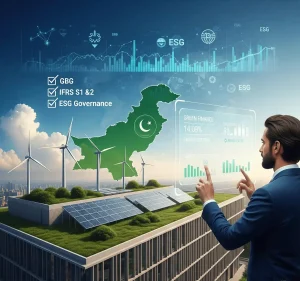

As the June 1, 2025, deadline approaches, listed companies in Pakistan must comply with the SECP’s sustainability reporting mandate under IFRS S1 and S2. This shift combines financial and sustainability disclosures, increasing transparency and investor confidence at both the national and international levels. Pakistani enterprises, particularly large, listed companies, must manage the implementation of IFRS and establish its standards to improve Pakistan’s globally comparability and competitiveness.
SECP has stated that it is considering a gradual adoption of the IFRS Disclosure Standards, which will be done in phases so that companies have time to train their teams for this much necessary implementation. The Institute of Chartered Accountants of Pakistan has also advocated for the implementation of these standards, emphasising the significance of revealing sustainability-related risks and opportunities that may affect an entity’s financial situation.
The SECP’s phased approach will aim to facilitate a smooth transition for businesses, allowing them to gradually integrate these standards into their reporting processes following extensive training for their teams. Pakistan is not alone in this journey; numerous developing countries, including Brazil, Nigeria, Turkey, and Bangladesh, have committed to implementing IFRS S1 and S2, showing a global trend towards improved sustainability reporting and corporate transparency.
Why It Matters?
The adoption of IFRS S1 and S2 means businesses must:
- Disclose material sustainability and climate-related financial risks
- Ensure regulatory compliance with SECP’s updated reporting framework
- Build trust with investors through internationally aligned disclosures
Bridging the Compliance Gap
Understanding and implementing sustainability reporting can be complex, but with the right training, you can seamlessly adopt the transition.
At Resources Future, we specialize in capacity building and tailored training to help businesses navigate these regulatory changes. Our SECP-aligned IFRS S1 & S2 training is ready to help you equip your teams with:
📊 Clear guidance on IFRS S1 & S2 requirements
📈 Materiality assessment techniques to identify financial impacts
🌱 Tools for sustainability data collection (e.g., Scope 1, 2, and 3 emissions)
📝 Best practices for SECP compliance based on global frameworks like TCFD and ISSB
Get Ahead Before the Deadline
By being farsighted and embracing these standards, Pakistani companies can enhance their transparency, attract international investors, and improve their competitiveness in the global market. Companies that proactively prepare for adoption will not only meet regulatory expectations but also gain a competitive edge in sustainable business practices.
Interested in a tailored training workshop? Let’s discuss how we, Resources Future, can support your compliance journey.