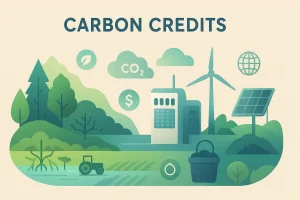

The carbon markets are changing fast. Traditional offset projects face scrutiny while removal-based solutions gain momentum. Biochar stands out as one of the most promising permanent carbon removal technologies available today.
The numbers tell a clear story. The biochar market is growing rapidly, with carbon credit prices reaching premium levels compared to traditional offsets. What makes biochar unique is its dual revenue model – project developers earn money from both carbon credit sales and biochar product sales.
The Science Behind Biochar’s Success
How Pyrolysis Creates Permanent Carbon Storage
Biochar works through a simple process called pyrolysis. Biomass waste gets heated in low-oxygen conditions at specific temperatures. This creates a carbon-rich material that can last thousands of years in soil.
The science is solid. Most projects reduce emissions but biochar goes further by capturing and storing carbon, actually preventing the release of CO₂ into the atmosphere. The carbon in the biomass would normally decompose and release CO₂. Instead, pyrolysis locks it away as stable biochar.
Temperature control is crucial during production. Different temperatures create different carbon quality levels. The optimal range produces biochar with the best balance of carbon content and long-term stability.
Why Permanence Matters
Biochar’s permanence sets it apart from other carbon solutions. Research shows biochar maintains high carbon content with excellent stability under soil conditions. The carbon stays locked up through multiple mechanisms:
- Chemical stability: Resistant structures that don’t break down easily
- Physical protection: Porous structure protects carbon from breakdown
- Soil integration: Forms stable bonds with soil minerals
This permanence advantage translates directly into premium pricing in carbon markets.
Soil Health Benefits Create Extra Value
Improving Soil Chemistry
Biochar doesn’t just store carbon – it improves soil health. Research shows biochar application increases soil pH in acidic soils, helping plants grow better.
The pH improvement happens through natural processes that release beneficial nutrients while reducing harmful elements. This creates better growing conditions for crops.
Better Nutrient Management
Farmers face rising fertilizer costs and environmental pressure to reduce nutrient runoff. Biochar helps with both challenges through its unique structure.
Research demonstrates biochar can significantly reduce nutrient losses while improving retention. This controlled release pattern matches plant needs better than conventional fertilizers.
Water Management Benefits
Water scarcity affects agriculture worldwide. Biochar application substantially improves soil water holding capacity. This happens through the material’s porous structure creating better water storage and reducing runoff.
These improvements benefit farmers through reduced irrigation needs and better crop resilience during dry periods.
Enhanced Soil Biology
Healthy soils need diverse microbial communities. Biochar application enhances soil microbial activity and creates protective spaces for beneficial organisms.
These biological improvements support better plant health, increased yields, and more resilient farming systems.
Project Development Framework
Feedstock Assessment Drives Success
The foundation of any biochar project is reliable feedstock supply. Agricultural and forestry waste streams offer the best opportunities with established disposal costs and consistent availability.
Priority feedstock sources include:
Agricultural Residues:
- Rice husks and straw
- Corn stalks and crop residues
- Nut shells and processing waste
- Sugarcane bagasse
Forestry Waste:
- Sawmill residues
- Tree prunings from management
- Wood chips and bark
Key assessment factors include year-round supply reliability, transportation costs, moisture content, and contamination levels.
Technology Selection and Scale Planning
Production technology must match feedstock characteristics and project goals. The main approaches are:
Pyrolysis Systems:
- Slow pyrolysis: Maximizes biochar yield and quality
- Fast pyrolysis: Offers additional energy recovery options
- Batch systems: Suitable for smaller operations
- Continuous systems: Better for larger-scale projects
Scale Considerations:
- Small-scale: Lower capital requirements, more flexible
- Medium-scale: Optimal balance of efficiency and investment
- Large-scale: Maximum efficiency but higher capital needs
The choice depends on available feedstock, market access, and financial capacity.
Building Community Support
Successful biochar projects require strong community engagement. Research shows community-led initiatives achieve better outcomes and greater sustainability.
Effective engagement includes:
- Education about biochar benefits
- Local employment opportunities
- Fair benefit distribution
- Environmental stewardship
- Long-term capacity building
Early stakeholder involvement and transparent communication are essential for project success.
Read More: carbon credit project guide
Standards and Methodologies
VCS VM0044 Methodology
The Verra VM0044 Methodology provides the most comprehensive framework for biochar carbon credits. This standard sets rigorous requirements for measuring and verifying carbon removals.
Key requirements include:
- New production facilities
- Waste biomass feedstocks
- Proper application verification
- Comprehensive monitoring protocols
The methodology ensures high-integrity credits that command premium prices in voluntary markets.
Gold Standard Options
Gold Standard offers an alternative pathway emphasizing sustainable development benefits and community impact. This approach focuses on:
- Enhanced permanence requirements
- Quantified social and environmental benefits
- Stricter community consultation
- Comprehensive impact assessment
Both pathways provide market access, with different emphasis on co-benefits and community engagement.
Revenue Model Analysis
Carbon Credit Pricing
Biochar carbon credits command premium prices due to their permanence and co-benefits. Current market conditions show:
- Premium positioning compared to avoidance credits
- Strong price growth trends
- Forward contract opportunities
- Regional price variations
Supply constraints and buyer preferences for removal credits support continued price strength.
Biochar Product Sales
Commercial biochar markets provide revenue diversification beyond carbon credits. Key market segments include:
Agricultural Applications:
- Soil amendments for crop production
- Specialty growing media
- Livestock feed supplements
Industrial Applications:
- Water filtration systems
- Construction materials
- Energy storage components
Environmental Applications:
- Soil remediation projects
- Stormwater management
- Landfill applications
Value enhancement strategies include quality certification, custom blending, and sustainability branding.
Financial Performance
Financial modeling shows strong economic potential across different project scales. Key factors include:
- Dual revenue streams providing stability
- Attractive payback periods
- Strong return on investment
- Scalability advantages
Project economics improve with scale, but smaller projects remain viable with proper planning and execution.
Implementation Roadmap
Pre-Development Phase
Project preparation requires systematic progression through key milestones:
Initial Assessment:
- Feedstock supply analysis
- Technology selection
- Site identification
- Financial modeling
Regulatory Preparation:
- Permit applications
- Methodology selection
- Stakeholder consultation
- Legal structure setup
Technical Development:
- Engineering design
- Equipment procurement
- Monitoring system design
- Quality protocols
This phase typically takes 6-12 months depending on project complexity and local requirements.
Registration Process
Carbon credit registration follows structured validation processes:
- Documentation preparation
- Independent validation
- Registry review and approval
- Initial credit issuance
Timeline varies by methodology and registry, typically requiring 12-18 months from start to first credits.
Operations Excellence
Successful operations require:
- Daily production monitoring
- Regular quality testing
- Chain-of-custody tracking
- Annual verification cycles
Continuous improvement focuses on efficiency optimization, market development, and stakeholder engagement.
Market Outlook and Opportunities
The biochar carbon credit market shows strong fundamentals driven by:
- Growing demand for permanent carbon removal
- Premium pricing for high-integrity credits
- Expanding end-user markets for biochar products
- Supportive regulatory trends
Early movers have significant advantages in securing feedstock supplies, establishing market relationships, and building operational expertise.
Partner with Resources Future for Biochar Success
Developing successful biochar carbon credit projects requires expertise across multiple disciplines – from technical design through market access. At Resource Future, we bring together the knowledge and experience needed to navigate this complex but rewarding market.
Our Biochar Expertise
Project Development:
- Feasibility assessment and financial modeling
- Technology selection and facility planning
- Regulatory compliance and methodology selection
- Community engagement and stakeholder management
Carbon Market Navigation:
- Registry selection and registration support
- Monitoring and verification planning
- Credit marketing and sales strategies
- Long-term market positioning
ESG Integration:
- Sustainable development impact assessment
- Community benefit measurement
- Environmental compliance assurance
- Stakeholder reporting frameworks
Why Choose Resources Future
Our approach follows our proven methodology: Envision. Strategize. Execute. Sustain.
Envision: We help you see the full potential of biochar projects, identifying opportunities that align with your climate goals and financial objectives.
Strategize: Our team develops comprehensive project strategies that address technical, regulatory, and commercial requirements while maximizing co-benefits.
Execute: We support implementation through detailed planning, stakeholder coordination, and operational excellence frameworks.
Sustain: Our long-term partnership approach ensures your projects continue delivering value while adapting to evolving market conditions.
Ready to Explore Biochar Opportunities?
The biochar carbon credit market offers exceptional opportunities for organizations committed to permanent carbon removal and sustainable development. Whether you’re exploring your first carbon project or expanding an existing portfolio, Tomorrow Crafted brings the expertise needed for success.
Contact us today to discuss your biochar project potential:
- Email: info@resourcesfuture.com
Schedule a consultation to explore how biochar projects can advance your climate strategy
At Resources Future, we don’t just develop carbon projects – we craft sustainable solutions that deliver lasting environmental, social, and economic value. Let us help you turn biochar opportunities into measurable climate impact and financial returns.
Resources Future – Where Climate Ambition Meets Market Reality
Crafting tomorrow’s solutions, today. Using innovative approaches and deep sustainability insights, we empower organizations across the globe to achieve their potential by creating solutions that are tailored to today’s needs for a resilient future.