
Climate change demands bold action. Traditional approaches alone won’t solve this crisis. That’s where nature-based carbon solutions come in – offering a powerful path forward that protects our planet while creating real economic value.
What Are Nature-Based Carbon Solutions?
Nature-based solutions (NbS) use natural ecosystems to fight climate change. These projects protect, restore, or manage forests, mangroves, grasslands, and farmland to capture carbon dioxide from the atmosphere.
The numbers tell a compelling story. Nature-based solutions can provide 37% of the climate action needed by 2030 to keep global warming under control. The global market opportunity? A staggering $12 trillion.
Think about that for a moment. We’re not just talking about environmental benefits. We’re looking at the largest economic opportunity of our time.
The Carbon Credit Revolution
The voluntary carbon market hit $1 billion for the first time in 2021. By 2030, experts predict this market could reach $530 billion annually. Two-thirds of that volume will flow into nature-based projects.
But here’s the problem: we’ve only unlocked 1.2% of nature’s cost-effective potential. The gap between what’s possible and what’s happening is enormous. That gap represents opportunity.
Carbon credits from nature-based projects work like this: one credit equals one tonne of CO2 removed from the atmosphere or prevented from entering it. Companies buy these credits to offset their emissions while supporting environmental restoration.
To better understand how these mechanisms work and why they matter, explore our in-depth guide on carbon credits and their role in climate solutions.
Four Major Types of Nature-Based Carbon Projects
Reforestation and Afforestation Projects
These projects plant new forests or restore existing ones. They’re the most established type of nature-based carbon credit.
Site selection matters enormously. The land must have been non-forest for at least 10 years. This prevents people from cutting down trees just to replant them later for credits.
Species choice affects both carbon storage and market prices. Mixed-species plantings earn more money than single-species forests. Buyers prefer biodiversity alongside carbon benefits.
Growth patterns follow predictable curves. Trees capture carbon rapidly in their first 10 years, then maintain steady accumulation for 40-60 years.
Current market prices range from $5-15 per tonne. High-quality projects with proven co-benefits can earn up to $40 per tonne.
Forest Conservation (REDD+) Projects
REDD+ stands for Reducing Emissions from Deforestation and forest Degradation. These projects focus on preventing forest loss rather than creating new forests, making them a critical tool in global climate action.
A strong REDD+ project begins with baseline modeling, which predicts what would happen without the project. This involves analyzing historical deforestation patterns, economic drivers, and land-use pressures to establish a realistic reference point.
Leakage prevention is another key challenge. Protecting one area cannot simply push deforestation to another. Successful projects operate at larger scales and often create alternative livelihoods for local communities, ensuring long-term sustainability.
Equally important is community engagement. Projects require free, prior, and informed consent (FPIC) from indigenous peoples and local communities. Fair benefit-sharing agreements must demonstrate tangible improvements in local well-being.
The carbon credit market for REDD+ has faced challenges, but high-quality projects remain essential for buyers seeking verifiable, long-term impact. Emerging approaches like Jurisdictional REDD+ (JREDD+) represent the next evolution, with entire regions or countries committing to forest protection. These jurisdictional efforts create stronger safeguards, more reliable credits, and often attract premium demand from global markets.
Mangrove Restoration Projects
Mangroves represent the premium segment of nature-based carbon credits. These coastal ecosystems store carbon 3-5 times faster than tropical rainforests.
The carbon storage capacity is remarkable. Mangroves account for 10-18% of total ocean carbon storage despite covering less than 0.1% of the seafloor.
Coastal protection adds significant value. Mangroves provide natural barriers against storms, tsunamis, and sea-level rise. During Hurricane Sandy, wetlands saved communities $625 million in damages.
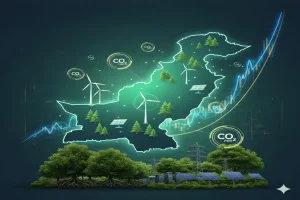
The Pakistan Delta Blue Carbon project showcases this potential. It plans to restore 350,000 hectares and remove 142 million tonnes of CO2. The project achieved $27.80 per tonne in its largest credit sale.
Premium pricing reflects quality and co-benefits. Mangrove credits typically sell for $15-40 per tonne. Projects with “Triple Gold” certification under community and biodiversity standards earn even higher premiums.
Regenerative Agriculture Projects
Regenerative agriculture is one of the fastest-growing approaches in sustainable farming. It relies on practices such as cover cropping, reduced tillage, crop rotation, and sustainable grazing to improve soil health and increase soil carbon.
Enhancing soil carbon is central to this approach, as healthy soils serve as one of the largest natural carbon reservoirs on Earth. Methods like no-tillage help retain existing carbon, while cover crops contribute to additional carbon capture.
A key challenge lies in accurately measuring soil carbon, since it can vary widely across fields and requires consistent long-term monitoring. Emerging technologies such as remote sensing and machine learning are being used to make measurement more reliable.
For farmers, adopting regenerative methods often requires upfront investment and may come with short-term yield declines. Incentives and revenue opportunities from carbon markets can help ease this transition and encourage wider adoption.
Curious which project type fits your investment goals? Connect with our team for tailored guidance.
The Development Process
Site Assessment and Feasibility
Comprehensive site assessment forms the foundation of success. This requires evaluating ecological, social, economic, and regulatory factors.
Climate suitability analysis looks at precipitation patterns, temperature ranges, and extreme weather risks. Projects must demonstrate resilience to wildfires, droughts, floods, and pest outbreaks.
Land tenure requires careful due diligence. Project implementers need clear rights to carbon benefits and long-term land control. This includes reviewing existing restrictions, indigenous rights, and potential conflicts.
Economic feasibility considers all costs against expected revenues. This includes land acquisition, implementation, monitoring, and long-term management costs.
Stakeholder Engagement
Stakeholder identification must include all affected parties. This encompasses local communities, indigenous groups, government agencies, conservation organizations, and private sector actors.
Engagement strategies require tailored approaches for different groups. Best practices emphasize early and continuous engagement throughout the project lifecycle.
Free, prior, and informed consent protocols are mandatory for indigenous territories. This requires transparent information sharing, adequate consultation time, and documented consent processes.
Participatory planning enables stakeholders to contribute local knowledge and identify co-benefit opportunities. Research shows meaningful engagement directly correlates with project success.
Monitoring and Verification
Baseline establishment requires rigorous measurement of existing carbon stocks using standardized protocols and conservative assumptions.
Monitoring systems must balance accuracy with cost considerations. Remote sensing, satellite imagery, and machine learning algorithms increasingly reduce costs while maintaining precision.
Technology integration includes terrestrial LiDAR, drone surveys, and artificial intelligence for biomass measurements. Real-time monitoring enables rapid response to threats.
Quality assurance requires independent third-party verification at regular intervals. Monitoring costs typically represent 10-15% of total project budgets.
For a comprehensive roadmap on developing and investing in carbon credit projects, including practical steps and market insights, explore our detailed Carbon Credit Project Guide
Beyond Carbon: Monetizing Co-Benefits
Biodiversity Credits
Biodiversity credits represent an emerging market opportunity. These can be sold separately from carbon credits or bundled together, depending on market preferences.
Market development is accelerating through pilot projects and multi-stakeholder initiatives. Premium pricing is emerging for projects with verified biodiversity outcomes.
As pilot projects and partnerships continue to expand, biodiversity credits are likely to play an increasingly important role in global markets. More details can be found in the World Economic Forum’s biodiversity credits market outlook
Water Quality Payments
Forest conservation and restoration significantly improve downstream water quality. Economic valuations range from $89-12,024 per hectare annually.
Payment mechanisms require clear beneficiary identification and robust measurement protocols. Water utilities and watershed management programs provide sustainable financing.(SCIRP, 2023)
Community Benefits
Community benefit programs ensure measurable improvements in local livelihoods, employment, and social infrastructure. Projects with strong community benefits achieve better long-term outcomes and higher market premiums.
Employment generation includes direct jobs in planting and maintenance, plus indirect opportunities in sustainable agriculture and ecotourism.
Managing Risks and Challenges
Permanence Risks
Permanence represents the biggest challenge for nature-based projects. Natural disasters, disease, and human disturbances can reverse carbon storage gains.
Buffer pool systems set aside 10-60% of credits in shared risk pools. Higher-risk projects contribute more credits to the insurance system.
Commercial insurance products are emerging to provide additional protection. Technology integration enables real-time monitoring and rapid threat response.
Monitoring Costs
Long-term monitoring costs typically account for 10-15% of project budgets over 20-30 year periods. Technology solutions are dramatically reducing these costs through automated systems.
Collaborative approaches enable cost sharing across multiple projects. Regional monitoring hubs provide services while maintaining independent verification standards.
Reducing monitoring costs through innovation and collaboration is becoming a cornerstone of sustainable project management. Further insights can be found in the EEA’s report on scaling nature-based solutions
Community Participation
Sustaining community engagement over decades requires long-term institutional arrangements and continued benefit flows. Governance structures must account for changing leadership and evolving priorities.
Economic sustainability requires diversified income streams and reinvestment of project revenues in community development.
These insights align with broader findings on community-driven sustainability, which emphasize governance, reinvestment, and diversified income. Further guidance is available in the World Bank’s report on long-term community engagement
Market Volatility
Carbon credit prices can fluctuate significantly over time. While some types of credits may lose value, high-quality credits tend to maintain stronger demand.
This is leading to greater market segmentation, where the quality of a credit has a major impact on its pricing. Higher-rated credits generally command a premium compared to lower-quality ones.
To manage volatility, long-term purchase agreements are becoming more common. Many corporate buyers are choosing to prioritize quality and reliability in their contracts rather than focusing only on price.
Market Outlook and Investment Opportunities
The voluntary carbon market is transforming toward quality and integrity. Buyers increasingly prioritize verified co-benefits, transparent monitoring, and long-term permanence.
Regulatory frameworks are evolving rapidly. Article 6 implementation and Core Carbon Principles create clearer standards for credit quality.
Corporate demand shows increasing preference for long-term agreements and premium pricing for co-benefits. Technology adoption is enabling higher-quality credits at competitive prices.
Blended finance mechanisms create new opportunities by combining carbon revenues with conservation finance and development funding. Green bonds provide additional capital sources for large-scale projects.
Private sector engagement is expanding beyond compliance toward strategic sustainability investments. Investment funds specializing in natural climate solutions are mobilizing billions in capital.
The Path Forward
Nature-based carbon solutions represent a critical pathway for achieving global climate objectives while delivering substantial co-benefits for biodiversity, communities, and ecosystems.
Success requires comprehensive technical expertise, genuine stakeholder engagement, robust monitoring systems, and innovative financing approaches.
As markets mature and quality standards evolve, projects that prioritize integrity, permanence, and co-benefit delivery will command premium pricing and sustained buyer interest.
The opportunity is enormous. The need is urgent. The solutions exist in nature – we just need to unlock them at scale.
The question isn’t whether nature-based solutions will play a major role in climate action. The question is how quickly we can scale them up to meet the challenge ahead.
For investors, project developers, and organizations serious about climate impact, nature-based carbon solutions offer a proven pathway to measurable results. The market is ready. The technology exists. The only thing missing is action.
The time for nature-based climate solutions is now.Join leaders who are turning climate action into an opportunity.
Get started with Resources Future
and be part of the change.