
Introduction
Pakistan’s carbon market is rapidly transitioning from theoretical discussion to tangible investment reality. The introduction of official Carbon Market Policy Guidelines in 2024, coupled with the development of a national registry and firm commitments under the Paris Agreement’s Article 6 signals the country’s serious intent to attract domestic and international capital. For a nation facing severe climate vulnerability, this market represents more than a trading platform; it is a critical mechanism for unlocking climate finance, driving sustainable growth, and transforming vital sectors like energy, forestry, and agriculture. Investors who enter now have a chance to secure a first-mover advantage, align with a clear policy direction, and tap into a significant reservoir of emissions reduction potential.
A Distinctive Investment Frontier
Despite contributing less than 1% of global greenhouse gas emissions, Pakistan is on the front lines of the climate crisis, as seen in the devastating 2022 floods and recurring heatwaves (which affected ~33 million people and caused ~USD 40 billion in damages) and recurring extreme heatwaves. This remains true in 2025, with Pakistan again grappling with severe floods and heat extremes. This disparity has positioned the country as a high-impact destination for carbon market initiatives. Current analyses indicate Pakistan could produce between 40 and 75 million carbon credits each year. By targeting just 10-15% of its emissions through structured projects, this could translate into annual revenues ranging from $400 million to $2.25 billion, revealing a substantial and largely untapped opportunity for the investment community.
The policy landscape is strengthening this proposition The 2024 Carbon Market Policy Guidelines, developed by the Ministry of Climate Change and Environmental Coordination (MoCC&EC) with international partners like UNEP, establish a clear regulatory foundation for both voluntary and future compliance markets. Key provisions include a 1% administrative fee on projects, a requirement that 5% of generated credits support Pakistan’s own climate goals, and a defined structure for sharing revenues between federal and provincial governments. Crucially, the government plans to implement a fully digital registry to minimize bureaucratic interference, thereby reducing opportunities for delays and corruption.
Further reinforcing long-term demand, Pakistan has committed to cutting its projected emissions by 50% before 2035, an ambitious goal that will depend heavily on private investment and international carbon finance.
Essential Concepts for the Market
Navigating this emerging market requires a firm grasp of its core components. The Voluntary Carbon Market (VCM) is the initial arena for projects, where companies buy credits to meet sustainability targets. Each carbon credit represents one tonne of carbon dioxide equivalent that has been verifiably reduced or removed, typically certified under global standards like Verra. Pakistan’s policy connects these voluntary credits to the international framework of Article 6, allowing for cross-border trade provided corresponding adjustments are made to ensure emissions reductions are not double-counted.
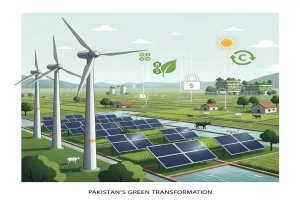
The system’s integrity hinges on MRV—Measurement, Reporting, and Verification—which guarantees that claimed reductions are real and lasting. The government’s emphasis on robust MRV and digital transparency is a key pillar of its credibility. Promising avenues for credit generation include green investment in renewable energy, battery storage, and energy efficiency, as well as forestry projects that deliver valuable co-benefits for biodiversity and local communities.
On-the-Ground Potential: Local Case Studies
Several pioneering projects demonstrate Pakistan’s practical potential for generating carbon credits.
- Urban Waste Management: The Lahore Composting Facility, a public-private partnership, aimed to convert municipal waste into compost, thereby cutting methane emissions from landfills. While it encountered operational challenges, it provided a valuable blueprint for aligning urban waste management with carbon finance.
- Industrial Decarbonization: In the energy sector, Lucky Cement has become a leader by integrating solar, wind, and battery storage into its operations. This shift is projected to reduce emissions by roughly 60,000 tonnes of CO₂ annually, creating a direct path to carbon credit generation while lowering energy costs.
- Distributed Energy: Net-metered rooftop solar installations across Pakistan already generate over 480,000 MWh of clean electricity each year. Research from the Pakistan Institute of Development Economics suggests this segment alone could yield over $20 million annually in carbon revenues if formally registered.
- Nature-Based Solutions: The Billion Tree Tsunami project in Khyber Pakhtunkhwa proved Pakistan’s capacity for large-scale afforestation. More recently, Sindh’s mangrove restoration efforts in the Indus Delta have made it a global leader, providing carbon sequestration while enhancing coastal resilience. A landmark initiative by the Sindh Forest Department sold 3.1 million credits, generating over $40 million in revenue and underscoring the commercial viability of forestry credits.
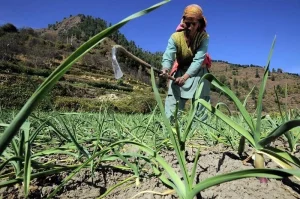
- Agricultural Innovation: Pilot projects are exploring soil carbon sequestration through practices like no-till farming. Given that agriculture is a major part of the economy, sustainable practices here offer a dual benefit of potential credit generation and enhanced farm productivity, though measurement methodologies are still evolving.
Balancing Risks and Returns
For investors, Pakistan’s carbon market presents a profile of high potential returns alongside measurable risks. Successful projects can generate revenue from both their core business (e.g., selling energy or compost) and the sale of carbon credits. High-quality credits from projects with social and environmental benefits can command premiums on the international market, where prices can range from $10 to $75 per tonne.
However, these rewards must be weighed against several risks. Upfront costs can be significant, covering project development, rigorous MRV systems, and administrative fees. Projects in forestry and land-use face “permanence” risk, where gains could be reversed by future deforestation or natural disasters. Furthermore, global demand and pricing for credits can be volatile, influenced by shifting corporate policies and international regulations.
Investors can mitigate these risks by adhering to high-integrity standards, securing long-term purchase agreements with credit buyers, and diversifying their project portfolios. Building local partnerships with provincial authorities or private industrial groups is also critical for navigating the operational landscape. Investors should also be mindful of external factors that affect profitability. Exchange rate fluctuations can alter the value of carbon revenues, reputational risks may arise if projects fail to meet integrity or community standards, and limited buyer demand can make credits harder to sell. Each of these factors has the potential to reduce overall returns.
The Critical Role of Policy and Institutions
Policy stability is the most important factor for attracting scaled investment. Pakistan has taken positive steps by publishing its guidelines and planning public consultations on draft rules for 2025, indicating a commitment to a transparent and iterative process. International programs like SPAR6C are providing technical support to prepare for Article 6 trading, while contributions from Transparency International Pakistan have helped embed integrity safeguards.
The planned digital carbon registry is a key development for building institutional credibility. By automating processes, it reduces discretion and increases trust through traceability. This aligns with global best practices and buyer expectations. Additional confidence-building measures include provisions for third-party verification and ensuring local communities benefit from projects, particularly in the forestry sector.
The Road Ahead for Investors
The outlook for Pakistan’s carbon market is dynamic. Significant international financial support, such as the World Bank’s Pakistan’s Country Climate and Development Report, which identified $20 billion in climate-related investment needs and discussions with the IMF for a $1 billion Resilience and Sustainability Trust, highlights an interest in co-financing Pakistan’s climate agenda. This suggests that carbon projects could be de-risked or scaled through blended finance structures that leverage multilateral capital.
Domestic momentum is also building. Major local companies in sectors like cement and textiles are beginning to explore carbon credits to meet ESG goals and maintain competitiveness, especially with mechanisms like the EU’s Carbon Border Adjustment Mechanism (CBAM) affecting exports. The textile industry, which accounts for over 60% of exports, is particularly motivated to use carbon credits to demonstrate lower carbon footprints. While not directly covered by CBAM, international buyers are increasingly demanding proof of low-carbon production.
Challenges, of course, persist. Pakistan must address governance gaps and fragmented policymaking to fully realize its potential. Investors should carefully assess regulatory capacity and political will, while actively advocating for transparency and accountability.
Conclusion
Pakistan’s carbon market stands at a critical inflection point. Its compelling combination of vast potential, clear policy direction, and growing interest makes it a standout opportunity for climate-focused investment. The message for investors is straightforward: early engagement offers not just the prospect of financial returns, but also a chance to influence a nascent market, build credibility, and contribute meaningfully to sustainable development in a highly vulnerable country.
From renewable energy and mangrove restoration to urban waste management and regenerative agriculture, Pakistan is demonstrating a diverse range of viable pathways for carbon credit generation. By partnering with local actors, insisting on international standards, and supporting robust MRV, investors can play a pivotal role in scaling this market responsibly. The hurdles are real, but the potential payoff is a thriving carbon market that establishes Pakistan as both a climate leader and a compelling investment destination in South Asia.
References
- Ministry of Climate Change, Government of Pakistan — Policy Guidelines for Trading in Carbon Markets (2024).
- UNEP-CCC. Pakistan publishes carbon market guidelines. 2024.
- Institute of Policy Research & Advocacy (IPRI). Policy Brief on Pakistan Carbon Market Guidelines. 2025.
- Transparency International Pakistan. Integrity Measures in Carbon Market Policy. 2024.
- PIDE. Unlocking Climate Finance Potential: Carbon Credits from Renewable Energy. 2024.
- Lahore Composting Facility project summary.
- Billion Tree Tsunami, Khyber Pakhtunkhwa.
- Sindh Forest Department carbon credit sales reports.
- Carbon Pulse. Pakistan pledges 50% emissions cut by 2035. 2025.
- Carbon Herald. Pakistan advances carbon market plans with UNEP-backed initiative. 2025.
- World Bank. Country Partnership Framework for Pakistan. 2025.
- Reuters. IMF-Pakistan climate finance talks under Resilience and Sustainability Trust. 2025.