
Sustainability reporting has become a critical component of corporate accountability, ensuring that businesses disclose their environmental and social impacts transparently. With increasing regulatory requirements and investor expectations, two major frameworks have emerged to guide companies in this space: the IFRS Sustainability Disclosure Standards and the European Sustainability Reporting Standards (ESRS).
IFRS Sustainability Disclosure Standards, also known as “IFRS S1” and “IFRS S2”, are a set of guidelines issued by the International Sustainability Standards Board (ISSB) on June 26, 2023, that require companies to disclose information about their sustainability-related risks and opportunities to investors, aiming to provide a global baseline for consistent and comparable sustainability reporting across different industries.
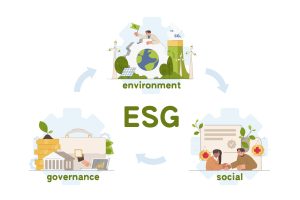
The Corporate Sustainability Reporting Directive (CSRD) is a regulation introduced by the European Union to enhance and standardise sustainability reporting by companies. It expands on the existing Non-Financial Reporting Directive (NFRD) and aims to provide greater transparency on Environmental, Social, and Governance (ESG) matters. To ensure the comparability and transparency of the data reported, the CSRD introduced the European Sustainability Reporting Standards (ESRS). The European Commission officially adopted the first set of ESRS on July 31st, 2023.
It would be interesting to look at the key differences between these two standards as they claim to be “interoperable”. The table below compares key features of ESRS and IFRS S1 and S2 to help us better understand the main requirements.
Comparison of ESRS vs. IFRS Sustainability Disclosure Standards
| Category | European Sustainability Reporting Standards | IFRS Sustainability Disclosure Standards |
| Use | Mandatory for companies under the Corporate Sustainability Reporting Directive (CSRD) in the EU, including large and listed companies. | Mandatory only if adopted by a jurisdiction; otherwise, compliance is voluntary. |
| Objective | Requires companies to disclose material risks, opportunities, and impacts related to ESG factors. Uses a double materiality approach. | Focuses on sustainability-related risks and opportunities that impact the company’s financial performance. Uses financial materiality only. |
| Materiality Concept | Uses double materiality: (1) Financial materiality (impact on company’s finances) and (2) Impact materiality (company’s effect on environment & society). | Uses single materiality, focusing only on financial materiality—how sustainability risks and opportunities affect financial performance. |
| Disclosure Requirements | Companies must disclose specific ESG topics (e.g., climate change, biodiversity, social issues) regardless of materiality. | Companies disclose sustainability-related information only if material to financial performance. |
| Primary Users | Serves a broad range of stakeholders: investors, regulators, NGOs, civil society, and employees. | Primarily designed for investors, lenders, and creditors who make financial decisions. |
| Time Horizons | Uses defined timeframes: short-term (current reporting period), medium-term (next 5 years), and long-term (beyond 5 years). | Requires companies to define their own short-, medium-, and long-term time horizons based on business context. |
| Presentation of Reports | Requires a dedicated sustainability statement within the management report. | Allows flexibility in presenting sustainability disclosures within financial reports. |
| Range of Standards | Consists of 12 separate standards, covering cross-cutting ESG factors (environment, social, governance). | Currently consists of two issued standards: IFRS S1 (General Sustainability) and IFRS S2 (Climate-Related Disclosures). |
| Climate-Related Disclosures | Requires extensive disclosures on climate change mitigation, adaptation, and transition planning, aligned with the Paris Agreement. | Focuses on climate-related risks and opportunities, primarily aligning with investor decision-making. |
| GHG Emissions Disclosure | Companies must report Scope 1, 2, and 3 emissions in alignment with the GHG Protocol. Scope 3 breakdown required for significant categories. | Requires disclosure of Scope 1, 2, and 3 emissions, but with fewer specific disclosure requirements than ESRS. |
| Sector-Specific Standards | Covers multiple ESG-specific topics across various industries. Companies must disclose industry-relevant information. | Provides industry-based guidance (from SASB standards), but does not yet have sector-specific standards. |
| Carbon Credits & Offsets | Requires separate disclosure of carbon credits used and total GHG reduction targets. Companies must disclose their net-zero strategies. | Requires disclosure of net GHG targets and reliance on carbon credits, but without as much detail as ESRS. |
| Integration with Financial Reporting | Aligns with EU Taxonomy and broader corporate reporting frameworks. | Aligns with IFRS Accounting Standards, focusing on financial impact. |
*Information Source: ESRS-ISSB Interoperability Guidance
In summary, the ESRS imposes broader disclosure requirements due to its dual focus on financial and impact materiality, covering both financial risks and an entity’s impact on people and the environment. This results in a wider scope and a larger set of stakeholders. ESRS E1, for instance, mandates detailed disclosures on climate change impact and alignment with the 1.5°C global warming target.
On the other hand, the IFRS Sustainability disclosure standards serve as a global baseline for investor-relevant sustainability information while allowing jurisdictions, like the EU, to incorporate additional requirements. The IFRS Foundation and EFRAG have worked together on both the standards and have provided guidance to align both frameworks. This makes these standards interoperable, helping entities streamline reporting, reduce duplication, and enhance transparency for stakeholders.