
Resources Future has tracked the early origins and current state of ESG reporting in Pakistan. If you are interested in ESG services, IFRS S1 and S2 training, and corporate decarbonization pathways, reach out to us today.
Emergence of Green Reporting: ESG reporting in Pakistan traces back to the early 2000s, when corporate awareness of “green” issues began taking root under global influence. The late 1990s and early 2000s saw international frameworks like the Global Reporting Initiative (GRI) and the concept of the triple bottom line (people, planet, profit) gain traction. In Pakistan, this translated into voluntary environmental and social reporting by a handful of forward-thinking companies. Notably, in 2002 the Association of Chartered Certified Accountants (ACCA), in partnership with WWF Pakistan, launched Pakistan’s first sustainability reporting awards. These Pakistan Environmental Reporting Awards (PERA) were pioneering at the time and aimed to recognize companies that published environmental or sustainability reports. Early adopters like Attock Refinery, Engro Corporation, and ICI Pakistan were frequent winners of these awards. Their reports typically followed international guidelines (with GRI becoming the “go-to” standard) and focused on environmental impact and community initiatives, well before any domestic regulations made such reporting routine.

Drivers and Influences: The initial drive for ESG (or “sustainability”) reporting in Pakistan was largely non-regulatory and influenced by international trends. Domestically, ACCA Pakistan, WWF, and Pakistan Institute of Corporate Governance (PICG) created awareness through seminars and awards, which encouraged companies to adopt new reporting practices. The emphasis was on educating corporate leaders about the link between business and sustainability, especially as Pakistan, an agrarian economy, faced environmental vulnerabilities. Internationally, Pakistan’s became signatory to the Paris Agreement on climate change that signaled that the country will not stay on the sidelines.

MNCs and export-oriented industries also brought in pressure to meet global ESG standards. It was common then, and is common now also, that only a few large and progressive firms (often those with foreign stakeholders or aspirations of global recognition) to publish standalone sustainability reports. By 2011, even Pakistan’s domestic accountancy institutes (ICAP and ICMAP) had introduced their own sustainability awards. Yet overall, ESG reporting remained in its infancy with limited uptake.
Early Regulations and Adoption Trends: The Securities and Exchange Commission of Pakistan (SECP) initially addressed sustainability indirectly – through, Pakistan’s 2002 Code of Corporate Governance but mandated no explicit sustainability reporting requirement (it only touched on it briefly as part of director training). The first notable regulatory step came much later: SECP’s voluntary CSR Guidelines in 2013. These 2013 guidelines encouraged companies to be socially and environmentally responsible and to disclose such initiatives, but they were not enforced by law.

Around the same time, a National CSR Forum was formed in 2016 to promote responsible business practices. Throughout the 2000s and early 2010s, adoption of ESG reporting was gradual. Corporate sustainability reports were largely confined to certain sectors – oil & gas, chemicals, utilities, and multinational consumer goods – where firms like Attock Refinery, K-Electric, Atlas Honda, and Nestlé Pakistan began issuing annual environmental or sustainability reports to demonstrate accountability. Many other companies included only cursory environmental or employee information in their annual financial reports, if at all. Overall, Pakistan’s ESG reporting began as a voluntary, externally driven practice, spearheaded by a few leaders under the influence of global frameworks and local advocacy.
2.So, What is Happening Today!
Regulatory Framework and Key Institutions: Very recently, ESG reporting in Pakistan has started to see a shift from purely voluntary efforts to a more structured landscape guided by regulators. SECP, as the corporate regulator, has taken the lead in formulating ESG disclosure policies. In 2022, the SECP introduced an ESG Regulatory Roadmap which outlined a phased approach to improve disclosures. A major milestone under this roadmap was the issuance of ESG Voluntary Disclosure Guidelines for listed companies (formally released in 2024). These guidelines – aligned with global standards like GRI, SASB, and TCFD – provide a baseline for companies to report on environmental impact, social responsibility practices, and governance structures on a voluntary basis. They allow flexibility (companies can publish a standalone sustainability report, integrate ESG info into annual reports, or disclose on their website) while encouraging transparency in each ESG pillar.


Concurrently, amendments to the Listed Companies (Code of Corporate Governance) Regulations, 2019 strengthened board responsibilities for sustainability. For example, boards of listed firms are now expected to set sustainability priorities, possibly form board-level sustainability committees, and ensure compliance with anti-harassment and gender diversity policies. This means that governance reforms are underway to embed ESG considerations into corporate oversight. Notably, Pakistan already mandates at least one women director on every listed company’s board (a requirement introduced in 2017 and confirmed in the 2019 Code) – a governance measure aligned with the “Social” and “Governance” aspects of ESG.
The State Bank of Pakistan (SBP), as the banking sector regulator, also contributed in the current ESG landscape. SBP focused on sustainable finance and risk management: in 2017, SBP issued Green Banking Guidelines (GBGs) requiring banks to integrate environmental and social risk considerations into their lending decisions. These guidelines mandate banks to establish systems for environmental and social due diligence before financing projects. As a result, banks must assess borrowers’ ESG risks (e.g. pollution, labor practices) and are encouraged to lend to environmentally friendly projects, as well as reduce their own carbon footprint. SBP monitors implementation of these guidelines and, more recently, has nudged banks toward climate risk assessment. Though not vigorously implemented, SBP continues to ask banks to consider ESG as a factor in credit risk – a company seeking a loan may need to demonstrate sound environmental and social practices to satisfy the bank’s requirements. This has indirectly started pulling even unlisted companies (as bank clients) into the ESG reporting fold, since they need to provide data on their E&S practices.

The Pakistan Stock Exchange (PSX), for its part, has been promoting ESG awareness among listed companies, though it does not yet impose mandatory ESG reporting as a listing rule. PSX joined the Sustainable Stock Exchanges initiative and encourages firms to pursue sustainability, notably by including ESG criteria in its annual “Top 25 Companies” awards (firms get points for reporting on SDGs, diversity, etc.). In 2021, PSX and PICG formed an ESG Taskforce to drive ESG adoption; by 2023 this taskforce (with support from a Big Four firm) had produced Pakistan’s first voluntary ESG adoption guidelines and conducted awareness sessions.

In 2024, PSX went a step further by launching an ESG Reporting Guide (“Primer on ESG Reporting”) for companies. This Primer is a guidance document (not a regulation) that helps companies understand ESG risks and opportunities and how to disclose relevant data. PSX has also hosted trainings on frameworks like TCFD (climate disclosures) in collaboration with IFC and others.

What Are the Reporting Requirements Today?: As of now, ESG reporting in Pakistan remains largely voluntary, but with increasing encouragement and some pockets of mandatory requirements. For listed companies, beyond financial reporting, they are encouraged (but not strictly required yet) to follow the SECP’s ESG Disclosure Guidelines. Compliance is not enforced by penalties since the guidelines are voluntary, but pressure is mounting via investor expectations and soft mandates (like “comply or explain” culture developing). However, certain specific disclosures have become mandatory through related regulations – for instance, listed companies must have and disclose policies on gender diversity (per SECP Circular 7 of 2021) and anti-harassment. Also, any company raising capital via Green Bonds must adhere to criteria set out in SECP’s Green Bond Guidelines (issued to facilitate issuance of environmentally purposed debt). For banks and financial institutions, SBP’s directives effectively require them to report on implementation of Green Banking practices and submit periodic reports on E&S risk management progress to the central bank. Furthermore, banks and insurers are expected to publish statements on their sustainability initiatives (many banks now include a section on CSR/ESG in annual reports to satisfy both SECP and SBP expectations). For unlisted companies, there is no direct requirement to publish ESG reports, but many large unlisted firms (especially those in the export sector or part of global supply chains or with mandated international targets) have begun voluntarily disclosing sustainability information to meet the demands of foreign buyers and development finance institutions. The SECP’s guidelines explicitly encourage all companies (not just listed) to adopt ESG disclosure practices, which suggests the net is widening.
Albeit, the biggest surprise (and perhaps in the right direction) came from the SECP when it directed all the listed companies to follow the sustainability standards in financial reporting through phased wise adoption of IFRS S1 and S2 standards. For listed companies, that meant sustainability reporting on S1 (general) and S2 (climate) that fulfils any two criterions on or after July 2025 to initiate sustainability reporting. The criterion included either i) annual turnover greater than Rs. 25 billion in the last two consecutive financial years, or ii) number of employees greater than 1,000, or iii) total assets greater than Rs. 12.5 billion. Beyond this, the SECP also outlined phased II and phased III of mandated sustainability reporting. If you are wondering ‘how’ to do IFRS S1 and S2 reporting, reach out to Resources Future today. We have designed exclusive training course material on IFRS S1 and S2 for our partners and corporates, putting together a blend of training around sustainability and financial reporting and providing participants with an in-depth chance to understand hands on sustainability practices and financial reporting.
So What is the ESG Adoption Across Industries and Market Segments: The level of ESG reporting in Pakistan varies significantly by industry and company size. Overall, the adoption rate is still low in aggregate – a recent analysis by KPMG Pakistan noted that only about 50 out of 540 companies listed on PSX had any sustainability reporting as of 2020 (less than 10%), and even fewer did so using rigorous standards like GRI or SASB. These numbers are gradually improving, but the bulk of comprehensive ESG reports come from larger corporations. Heavy industries and energy companies (oil & gas, power generation, chemicals) have shown higher adoption because of their environmental impact and public scrutiny – for example, almost all major oil refineries and cement manufacturers now publish environmental performance data or sustainability reports. The situation has not changed a lot: Lucky cement received an A* rating from GRI back in 2011 and won their first sustainability award in 2012.

Financial institutions (banks in particular) are also among leaders in ESG disclosure, partly due to SBP’s push; many banks issue annual sustainability reports or at least detailed CSR reports discussing green financing and community work. Consumer goods and textile exporters are increasingly reporting on ESG, driven by supply-chain requirements (international buyers insist on compliance with social and environmental standards). Multinational subsidiaries like Unilever Pakistan or Nestlé Pakistan align with their global parents’ reporting standards and often release local sustainability updates. In contrast, small and medium-sized enterprises (SMEs) and purely domestic firms are lagging. As one observer noted to Resources Future, many SMEs remain unaware or unconvinced of the benefits of ESG and perceive it as more relevant for large corporations or those with obvious environmental impact. Limited resources and lack of expertise mean that most SMEs (and even some big family-owned conglomerates) do not produce standalone ESG reports. The market segmentation is clear: large listed companies vs. others – large listed firms face more investor pressure, whereas unlisted companies and SMEs often only undertake minimal compliance (e.g. obeying environmental laws or labor laws) without formal ESG reporting.
But Where is Pakistan as Compared to Global Benchmarks: Compared to regional peers, Pakistan’s ESG reporting framework is at an earlier stage. For instance, India has moved much faster in mandating sustainability disclosure – the Securities and Exchange Board of India (SEBI) now requires the top 1,000 listed companies to file annual Business Responsibility and Sustainability Reports (BRSR), which became mandatory from FY 2022-23. This means hundreds of companies report on ESG metrics in a standardized format, far outpacing Pakistan’s mainly voluntary regime. Likewise, in the United Arab Emirates (UAE), the Securities & Commodities Authority issued regulations in 2022 making ESG reporting compulsory for all listed companies, for roughly 130 companies on UAE exchanges. Other countries in the Middle East (Saudi Arabia, Oman, etc.) have also introduced either mandatory rules or official guidelines in the past couple of years. In contrast, SECP has recently published voluntary guidelines and has not yet made ESG disclosures a listing requirement. Globally, the trend is toward even stricter standards: the EU’s new Corporate Sustainability Reporting Directive (CSRD), for example, will enforce detailed ESG reporting for thousands of companies in Europe, and regulators in the US and China are rolling out climate risk disclosure rules. Pakistan, by virtue of using international accounting standards, will be influenced by these developments – notably, the IFRS Foundation’s new ISSB standards (IFRS S1 and S2) for sustainability and climate reporting released in 2024 by SECP mean that in IFRS jurisdictions (which include Pakistan), companies will soon start reporting on material sustainability risks and opportunities in their financial filings. In summary, Pakistan’s current ESG reporting landscape is evolving from voluntary to semi-regulated and regulated (in the case of S1 and S2), with key regulators (SECP, SBP, PSX) laying groundwork. A minority of companies (mostly large, listed ones) are publishing ESG reports, while the majority are still catching up.
3.So, What are the Challenges?
Despite growing awareness, Pakistani companies face numerous challenges in adopting and improving ESG reporting, spanning regulatory, cultural, and practical issues:
- Why Bother?: One fundamental barrier is the lack of mandatory enforcement and oversight. Since most ESG disclosures are voluntary, companies that are not inclined to report face little to no penalty for non-compliance. This weak enforcement leads to a “why bother?” attitude in some quarters. Even where guidelines exist, regulators have limited capacity to monitor the quality of ESG reports. Until recently, there was no comprehensive ESG-specific regulation compelling businesses to disclose non-financial performance. The existing environmental laws and labor laws require certain compliance (e.g. pollution limits, safety standards) but do not require companies to publicly report on these issues. This means firms can remain opaque about their sustainability performance without breaching any rules. Consequently, regulatory inertia and a historically weak institutional push have slowed the uptake of ESG reporting. Only now, with the SECP’s roadmap and other efforts, is this beginning to change, but enforcement mechanisms (such as audit requirements or filing reviews) are still in nascent stages.
- Corporate Culture and Awareness: Many companies in Pakistan have a traditional corporate culture focused almost exclusively on financial metrics. There is hesitation and skepticism about ESG – some view it as a western concept or a public relations exercise rather than a strategic imperative. This is especially true for SMEs and family-owned businesses, where awareness of ESG principles is low. Changing this mindset is a challenge. Furthermore, even when leadership is interested, there can be limited buy-in from middle management if ESG goals are not integrated into performance targets. The survey by PICG in 2023 found that a lack of leadership buy-in was a key challenge in implementing ESG practices internally.
Capacity and Data Constraints: Implementing ESG reporting requires expertise, systems, and data collection processes that many Pakistani companies currently lack. There is a shortage of human resources and technical know-how in this domain. Companies may not have dedicated sustainability officers or teams; often the task of ESG reporting is added on to the finance or CSR department’s duties. Collecting reliable data on carbon emissions, energy usage, water consumption, workforce diversity, supply chain practices, etc., can be daunting if no systems were in place. While Resources Future has worked with companies in the past help calculating their carbon emissions, we have found many firms having fragmented or non-digitized data, which makes it hard to gather and quantify ESG metrics. For example, tracking greenhouse gas emissions might require installing measurement tools or using calculation protocols that firms are unfamiliar with. Additionally, reporting against international standards often demands quantitative, comparable metrics, which local companies find challenging due to lack of baseline data or fear of revealing sensitive information. (For instance, disclosing a CEO pay ratio or injury rate might be seen as sensitive, and companies avoid it due to confidentiality concerns, as highlighted by consultants.) Thus, data availability and quality are significant barriers – companies might not have the necessary data readily available and gathering it can be time-consuming and costly without prior preparation.
- Our Analysis Paralysis Dilemma: Another difficulty is deciding what and how to report. The ESG reporting field has multiple frameworks (GRI, SASB, Integrated Reporting, TCFD, etc.), and until recently there was no Pakistan-specific standard. Companies often feel unsure whether to follow global templates or wait for local guidelines. This can lead to analysis-paralysis, with some firms opting to do the bare minimum. The voluntary nature of guidelines also means there’s variability – one company’s sustainability report might be 100 pages of glossy narrative, while another’s a one-page summary in the annual report. Such inconsistency reduces comparability and can discourage companies (they lack a clear roadmap of what’s expected). The new SECP guidelines aim to address this by providing baseline indicators, but since they are voluntary, the onus is still on companies to proactively adopt them, which many may not do without further incentives or requirements.
- Sector-Specific Challenges: Different sectors face unique obstacles in ESG reporting:
-
- SMEs: Small and medium enterprises often lack both awareness and resources for ESG reporting. They typically have no formal CSR departments. The cost (in time, money, and personnel) of producing a sustainability report or implementing data tracking can be prohibitive for a smaller firm. Until market pressure (e.g. from lenders or buyers) forces their hand, SMEs remain a tough segment to onboard in ESG reporting.
-
- Financial Institutions: Banks and insurers are now expected to incorporate ESG due to SBP and global investor pressure, but they face challenges in developing methodologies to assess climate risk and social risk. For banks, training credit officers to evaluate a borrower’s environmental risk or conducting portfolio-wide ESG risk analyses is a new skill set. They are also tasked with reporting their own footprint (e.g. paper, energy use in branches) which requires coordination across large organizations. While large banks have started doing TCFD-aligned (and with upcoming IFRS S1 and S2 reporting) in their annual publications, smaller banks and non-bank financial companies are still ramping up capacity.
-
- Energy and Manufacturing: Companies in heavy industries (power plants, oil refineries, cement, textiles) have the most at stake in ESG terms – they are major polluters or resource consumers – but reporting transparently on these issues can expose them to scrutiny. A major challenge is the fear of negative exposure: a power company might worry that disclosing high carbon emissions or water usage could invite criticism or regulatory action. Additionally, these industries may not have modern environmental management systems, so gathering accurate emission or waste data is technically difficult. Where Resources Future has worked with clients before, we have found that historically companies data might show poor performance, which they are hesitant to publish. Without legal compulsion, such firms may choose silence over transparency.
-
- Public Sector Companies: State-owned enterprises (SOEs) and public utilities also lag in ESG reporting. They may have bureaucratic hurdles and unclear directives on sustainability disclosure. Unless the government mandates ESG reporting for SOEs, these entities often focus on compliance with government audits and do not produce public sustainability reports, missing an opportunity to lead by example. Nonetheless, the shinning light remains Oil and Gas Development Company Limited (OGDCL) which remained as the first ever listed SOE in Pakistan to publish a comprehensive ESG report.
- Chicken and Egg Situation: The demand side of ESG is another barrier – historically, Pakistan’s investor community has not strongly demanded ESG information. The local stock market is dominated by short-term investors and retail traders for whom financial performance outweighs non-financial factors. Unlike in developed markets, there are few dedicated ESG or “socially responsible” funds locally that would pressure companies for better ESG disclosure. This lack of investor pressure meant that for a long-time companies saw little market reward for investing in sustainability reporting. Market readiness is still low – ESG ratings for Pakistani companies are not widely available, and many financial analysts do not incorporate ESG in their valuations. The absence of an ESG index or rating system on PSX means companies do not get an immediate stock price benefit from ESG actions, which can be a demotivator. In short, the market ecosystem around ESG is still developing. Until investors reliably reward high ESG performers (through lower cost of capital or higher valuations) and penalize laggards, companies face a classic “chicken and egg” situation – they are reluctant to allocate resources to ESG reporting in a market that hasn’t fully recognized its value.
Despite these challenges, awareness is improving and some companies have overcome initial hurdles. A 2023 PICG survey of Pakistani businesses found that 86% of respondents were aware of ESG risks to their companies and a majority could identify opportunities in sustainability. This suggests that once clarity, capacity, and demand issues are addressed, many companies are open to integrating ESG into their strategy. Overcoming the above barriers will require concerted efforts from regulators, industry associations, and the companies themselves, as discussed in the next section.
4.So, What are Pakistan’s Next Steps on ESG Reporting?
The trajectory of ESG reporting in Pakistan is set toward greater adoption, standardization, and greater mandatory compliance in the coming years. Below are key aspects of the future outlook and recommended next steps:
Regulatory Initiatives on the Horizon: Going forward, regulators like SECP, SBP, and PSX are expected to intensify their push for ESG integration:
- The SECP will likely transition its ESG guidelines from voluntary to more formal requirements over time. They have already mandated IFRS S1 and S2 reporting starting with phase 1 implementation plan with listed companies to publish their annual financial reports incorporating sustainability aligned reporting. SECP’s own ESG roadmap hints at gradually moving from encouragement to enforcement. We can anticipate updates to the Companies Act or listing regulations that make ESG disclosures a part of annual reporting obligations for listed firms. Additionally, SECP is focusing on capacity-building: the launch of the ESG Sustain portal with support from development partners provides companies a platform to report data and access guidance, which could evolve into a central database for ESG disclosures. We may also see SECP working on sector-specific ESG reporting guidelines (for sectors like agriculture, textiles, etc.) to provide more tailored metrics.
- The SBP is expected to broaden its sustainable finance agenda too. Potential next steps include issuing guidelines for climate-related financial disclosures by banks (in line with TCFD) and conducting climate stress tests for the banking sector. SBP could require banks to publicly report their Scope 3 financed emissions (emissions resulting from their loan and investment portfolios) as part of annual reports, which would be a strong signal. Furthermore, SBP might integrate ESG factors into prudential regulations – for instance, giving incentives for green lending (lower capital charges or refinance schemes for green projects) or penalizing banks that fail to comply with green banking requirements. As for asset managers and institutional investors, the SECP has already introduced Stewardship Guidelines (2023) requiring institutional investors to consider ESG in their investment policies. Enforcing these will push investors to demand better ESG data from companies, which will effectively spread the influence to unlisted firms as well.
- The PSX could move from guidance to requirements. In the near future, PSX might consider making it a listing rule that companies publish an annual ESG/sustainability report or ESG section in their annual report (perhaps starting with companies of a certain size). Already, PSX’s encouragement has set the stage; a formal requirement would not be surprising as regional exchanges (like in UAE and Saudi Arabia) have gone that route. PSX might also introduce an ESG Index or a sustainability index that tracks the performance of companies with high ESG ratings, which would incentivize companies to improve their ESG scores to be included.
ESG Disclosures: Listed vs Unlisted Companies: In the future, listed companies will almost certainly face stricter ESG disclosure mandates than today. Within 2-3 years, it is plausible that all PSX-listed firms will need to report on a core set of ESG metrics annually, either due to SECP/PSX requirements or because the already mandated IFRS sustainability standards as part of financial reporting. This means listed entities should prepare for integrated reporting – combining financial results with ESG results – as the norm. We may see many firms moving toward Integrated Reporting frameworks that link their sustainability performance with business strategy (some pioneers in Pakistan like Engro have already started issuing integrated annual reports).
For unlisted companies, the pressure will come more indirectly. Banks might require even private borrowers to share ESG information; similarly, suppliers to multinational corporations will have to meet ESG criteria. The government could also extend some reporting expectations to unlisted public-interest entities (for example, big state-owned enterprises or large private companies above a certain revenue threshold) by encouraging them to follow the same guidelines as listed firms. However, SMEs and smaller family businesses might continue to be exempt from formal reporting requirements in the near term, given the burden it would entail. Instead, for those, a support approach (providing toolkits, simplified reporting templates) could be taken to gradually build a culture of transparency.
Emerging Trends and Opportunities: Several emerging trends will shape ESG reporting and its scope in Pakistan:
- Green and Sustainable Finance: Pakistan is tapping into green finance as both a driver and outcome of ESG focus. In recent years, the country issued its first green bonds – for instance, in 2021 the government-owned WAPDA launched a $500 million Green Eurobond (the “Indus bond”) to finance hydro projects, which was oversubscribed six times. SECP has introduced guidelines to facilitate Green Bonds and even Gender Bonds, which would enable companies to raise funds specifically for environmental or social projects. Going forward, more companies are expected to issue green sukuks (Islamic bonds) and socially focused debt, which will require robust reporting on use of proceeds and impact. The financial sector is also exploring green loans and sustainability-linked loans that tie interest rates to borrower ESG performance. Such instruments will push companies to improve ESG disclosures to access favorable financing. In essence, capital markets will reward ESG transparency – those who report and perform well on ESG may secure funding more easily or at better rates.
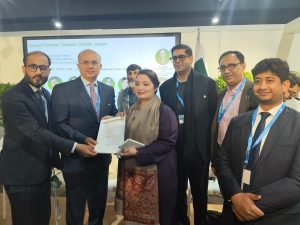
- Carbon Markets and Climate Commitments: Pakistan is gearing up to participate in international carbon trading mechanisms under the Paris Agreement. At COP29, Resources Future was part of the panel that inaugurated Pakistan’s Carbon Market Policy Guidelines for the Government, which effectively meant that the government now has an established framework for both voluntary and compliance carbon market activities. This implies that Pakistan now has a window to host emissions-reduction projects and sell carbon credits globally. The development of carbon markets will have a direct link to ESG reporting: companies that engage in carbon credit projects will need to measure and verify their emissions reductions meticulously and disclose this information. Additionally, as Pakistan updates its Nationally Determined Contributions (climate targets), high-emitting sectors might be assigned emission reduction goals. We may see the introduction of a domestic emissions reporting system or even an Emissions Trading Scheme (ETS) in the longer term. For companies, this trend underscores the importance of tracking carbon footprint and climate risks in their reports. If you want to track your carbon footprint, reach out to Resources Future as we simplify GHG accounting and associated carbon markets framework for you. Eventually, carbon accounting could become a standard component of corporate disclosures, and firms with heavy emissions might be expected to publish transition plans.
- Integration of ESG into Financial Reporting: Globally, the line between financial and non-financial reporting is blurring, and Pakistan will follow suit. With frameworks like the ISSB’s IFRS S1 & S2 becoming the baseline, it will be mandatory for Pakistani companies to embed ESG information into their annual reports and financial statements. Investors and regulators want a unified picture of company performance, so things like climate-related risks, workforce metrics, and governance policies will be reported alongside balance sheets and income statements. This also raises the likelihood of third-party assurance of ESG data – auditors may start verifying key ESG metrics to lend credibility. The ICAP has already released guides on reporting standards (e.g. a guide on Greenhouse Gas emissions reporting), preparing accountants for this integration. Over the next few years, one can expect mandatory assurance or audit of sustainability reports to ensure reliability of ESG disclosures in line with S1 and S2 timelines.
- Voluntary to Mandatory Shift: The overall trend is that what is voluntary today may become mandatory tomorrow. For example, corporate governance practices that started as “best practice” (like having independent directors or board diversity) became mandatory through the Code of Corporate Governance. A similar path is envisioned for ESG: disclosures that are currently voluntary will likely be codified into law or listing rules. Companies would be wise to start reporting now, iron out the challenges, and get ahead of the regulatory curve. Resources Future can foresee a future where failing to disclose ESG information might be viewed akin to failing to disclose financial information – that might result in regulatory sanctions or loss of investor confidence.
Recommendations to Advance ESG Reporting: To accelerate progress, a multi-pronged strategy is needed. Below are some policy recommendations and steps that could significantly advance ESG reporting in Pakistan:
- Phased Mandatory Reporting: Regulators (across the board) should announce a clear timeline for phasing in mandatory ESG disclosures. For example, require the top 100 listed companies by market capitalization to publish ESG reports within the next year or two, then extend this requirement to all listed companies within, say, 3-4 years (mirroring India’s phased approach). This allows companies time to prepare while signalling that reporting will not remain optional indefinitely. In this regard, mandatory, phase-wise S1 and S2 reporting is a good start.
- Standardize Reporting Framework: Adopt a national ESG reporting standard or template aligned with global frameworks (such as a localized GRI Standards adaptation) so that all companies report on a core set of metrics. SECP’s 2024 guidelines already provide a baseline; these can be expanded into a more detailed reporting format that companies must follow.
- Capacity Building and Training: Invest in building expertise for ESG reporting. This includes training programs for corporate management and boards on how to identify material ESG issues and report them. Resources Future along with our partner organization, Sohail and Partners, has disseminated Board Development Sessions across listed and unlisted companies in Pakistan. Regulators and business councils should also develop toolkits and software solutions to help companies (especially SMEs) collect and manage ESG data.
- Enhance Regulatory Oversight: Regulators should strengthen oversight by reviewing ESG disclosures and providing feedback. SECP could form a dedicated Sustainability Monitoring Unit to analyze the quality of reports and highlight best practices or deficiencies. Over time, consider making external assurance (audit) of key ESG information mandatory for listed firms to improve credibility. Enforcement of existing related laws (environmental, labor) should also be linked with reporting – e.g. companies could be required to state in their annual reports whether they are in compliance with environmental regulations and the status of any violations or fines.
- Incentivize Early Adopters: To encourage companies to embrace ESG reporting before it becomes mandatory, introduce incentives. This can include recognition awards (reviving something akin to the ACCA-WWF awards on a broader scale, perhaps a national ESG excellence award endorsed by the government). PSX’s inclusion of ESG criteria in its Top Companies Award is a good example; more such recognition can create positive competition. Additionally, credit should be given by financial institutions – for instance, the central bank could direct that companies with strong ESG scores get favorable consideration in credit risk weighting.
- Expand Stakeholder Engagement: Companies and regulators alike should engage stakeholders – investors, consumers, civil society – to raise demand for ESG information. For instance, institutional investors (like pension funds, insurance companies) should be encouraged (or required via stewardship codes) to ask for ESG disclosures from their investee companies. Public awareness campaigns can educate consumers to support companies that are sustainable, indirectly pressuring businesses to report and improve ESG performance. The media also plays a role: business news can start highlighting ESG rankings or report cards for companies.
- Leverage Technology and Data Platforms: Utilize technology to simplify ESG reporting. The SECP’s “ESG Sustain” portal can be developed into a comprehensive online reporting system where companies input their ESG data in a structured way. This would not only make it easier for companies to report (especially if it provides guidance as they fill in data), but also create a centralized database that investors and regulators can access. Over time, this database could feed into the creation of a Pakistan ESG Index or rating system that scores companies on their sustainability.
- Policy Coherence and Collaboration: Ensure that various arms of the government work in sync. For example, the MOCC&EC could coordinate with SECP so that national climate commitments (like emissions targets) translate into corporate reporting expectations (like disclosure of carbon emissions and reduction plans). Collaboration with international organizations (UN, ADB, IFC, etc.) can bring technical assistance and align Pakistan’s standards with global best practices. Learning from peer countries’ experiences (India’s BRSR, Malaysia’s integrated reporting journey, etc.) can also inform local policy tweaks.
Pakistan’s vulnerability to issues like climate change and social inequality means the stakes are high – better ESG practices are not only about reporting but about real impact and risk management. In the coming years, Resources Future foresee ESG considerations to be woven into the fabric of corporate governance and strategy in Pakistan. Companies that adapt quickly – integrating ESG into their core operations and reporting standards – will likely reap benefits in terms of investor trust, resilience, and global competitiveness. Conversely, those that delay may find it increasingly difficult to access capital. With continued reforms and collective effort, Pakistan can elevate its ESG reporting standards to match global benchmarks.
Sources:
- ACCA Pakistan & WWF – “Sustainability Reporting: The Evolving Landscape in Pakistan” (2018)
- Dawn News – “The age of sustainability reporting” (July 17, 2023)
- SECP – ESG Voluntary Disclosure Guidelines 2024 (Press Release)
- Pakistan Stock Exchange – Sustainable Stock Exchanges Initiative Profile (2024)
- ACCA AB Magazine – “Practitioners key to Pakistan’s ESG drive” (Sept 2023)
- PICG & PSX – ESG Survey Report 2023
- Reuters – “Pakistan rolls out plans to tap global green financing avenues” (2021)
- Credible ESG (Blog) – “ESG Reporting in GCC – UAE & regional developments”
- Deloitte (India) – “Business Responsibility and Sustainability Report (BRSR) requirements”
- MOCC&EC – “Pakistan Carbon Market Policy Guidelines (2024)”