
A simple explainer for businesses, investors, and project developers exploring Pakistan’s new carbon market. Simply reach out through our website or email info@resourcesfuture.com. We’ll schedule a 30-minute short introductory call to understand your project idea and advise whether it qualifies for carbon credit registration. The first consultation and preliminary screening are free, which is our way of helping more Pakistani developers enter the market.
- What exactly are carbon credits?
Carbon credits are like certificates for reducing pollution. Each credit equals one tonne of carbon dioxide (CO₂) either avoided or absorbed.
If a project — say a solar farm, a mangrove plantation, or a waste-to-energy plant — helps reduce emissions, it earns carbon credits.
Those credits can then be sold to companies that want to offset their own carbon footprint.
- What’s happening in Pakistan’s carbon credit market?
Pakistan now has an official, government-backed system to create and trade carbon credits.
In 2024, the Government launched the Policy Guidelines for Trading in Carbon Markets, which:
- Define how projects get approved and verified,
- Establish a National Carbon Registry for tracking credits,
- Allow both public and private developers to participate, and
- Ensure communities and provinces share the benefits.
This means Pakistan is finally ready to play seriously in both domestic and international carbon markets.
- What types of projects can earn carbon credits in Pakistan?
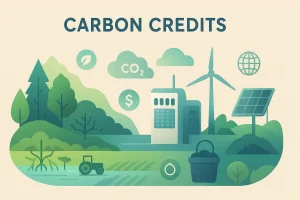
Any project that reduces or captures greenhouse gases. Examples include:
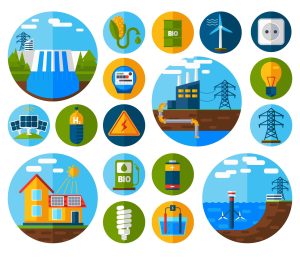
- Renewable energy: solar, wind, hydropower
- Waste management: landfill gas capture, composting, biogas
- Agriculture: improved manure management, bio-fertilizer, low-methane rice
- Forestry: tree planting, mangrove restoration, forest conservation
- Clean cooking: improved cookstoves for households
- Transport: electric vehicles, fuel-efficient fleets
If it avoids emissions or increases carbon storage, it can potentially generate credits.
- How do carbon credits generate revenue?
Each credit represents one tonne of verified emission reduction — which can be sold in the market.
Buyers include:
- International corporations with net-zero commitments,
- Airlines under the CORSIA compliance scheme,
- Domestic companies looking to meet ESG or sustainability targets.
Example:
A 10 MW biogas plant might cut 40,000 tonnes of CO₂ a year.
If sold at USD 10/tonne, that’s USD 400,000 in annual carbon revenue, on top of energy sales.
- Who earns from carbon credit sales?
The project developer or owner earns the main share, but the Government ensures fair benefit sharing:
- 5% of credits go directly toward Pakistan’s national emission target.
- 12% of sale revenue (CAF) is shared — half to the province, half to the Pakistan Climate Change Fund.
- 1% of gross revenue is an administrative fee for the federal government.
This structure makes sure both the state and local communities benefit.
- Who manages this system?
The Ministry of Climate Change and Environmental Coordination (MoCC&EC) runs it as the National Designated Authority (NDA).
Every project must go through these stages:
- Project Idea Note (PIN) → a short concept note.
- Letter of Intent (LOI) → official approval to proceed.
- Project Design Document (PDD) → detailed technical and financial plan.
- Letter of Approval (LOA) → final green light for A6 credits.
- How much do carbon credits cost or sell for?
Prices vary a lot depending on the project type, quality, and buyer demand.
As of early 2025:
- Renewable energy / efficiency credits: USD 3–7 per tonne
- Cookstoves / waste management: USD 8–12 per tonne
- Nature-based projects (forests, mangroves): USD 12–25 per tonne or more
- Premium Article 6 or “compliance-ready” credits: USD 20–40 per tonne
Buyers are willing to pay more for high-integrity projects — ones that are verified, transparent, and deliver social or biodiversity benefits.
- How much does it cost to register a carbon credit project?
Registration costs depend on project size, methodology, and which international standard you use (e.g., Verra, Gold Standard, or future Article 6.4 mechanism).
Typical cost heads include:
- Pre-Feasibility & baseline studies: USD 3,000–30,000
- Validation & verification audits: USD 10,000–25,000 per round
- Registration & issuance fees: usually 1–2% of total credit revenue (paid to the standard or registry)
- Consulting & MRV setup: depends on complexity (USD 5,000–20,000)
In Pakistan, developers also account for:
- 5% credit deduction for NDC,
- 12% Corresponding Adjustment Fee (CAF), and
- 1% federal administrative fee.
So overall, you might expect total costs to be USD 30,000–80,000 upfront for a medium-scale project, plus small annual MRV costs — but these are usually recovered quickly once credit sales begin.
- Who pays for registration — the developer or the buyer?
Usually the project developer covers the early costs of registration and verification.
Later, these costs are recovered from carbon credit sales or co-financing from buyers who sign early offtake agreements.
Some corporate buyers even agree to pay upfront finance in exchange for a discounted credit price later — this is called a forward purchase agreement (ERPA).
- Can Pakistani banks or investors finance carbon projects?
Yes, but the market is just emerging. With the 2024 policy and SBP green taxonomy in place, local banks and DFIs are now exploring green lending products that treat carbon credits as part of the project’s revenue stream.
If a developer has:
- a clear baseline study,
- an approved LOI/LOA from MoCC&EC, and
- a potential buyer or price floor,
then banks can start assessing the project like any other infrastructure or sustainability asset.
This is why many developers are now turning to Resources Future (RF) for feasibility and MRV-backed financial models.
- Do carbon credit prices stay fixed?
No. Carbon prices change with market demand, global policy shifts, and credit quality.
High-integrity projects with clear social or biodiversity co-benefits maintain strong demand.
Low-quality or unverified projects can lose value quickly.
That’s why projects should build in price scenarios — optimistic, conservative, and minimum — when doing financial planning.
- What determines whether a project gets a higher price?
Buyers look for a few key things:
- Transparency: Clear documentation, baseline, and verification.
- Community impact: Benefits for local people.
- Additionality: Emission reductions that wouldn’t happen otherwise.
- Sustainable development co-benefits: biodiversity, health, gender inclusion.
- Certification: Verified by credible international standards.
Nature-based and high-quality social-impact projects often fetch premium prices.
- What are Pakistan’s official registration fees and deductions?
Under the 2024 Carbon Market Policy:
- 5% of generated credits → automatically set aside for Pakistan’s own climate targets (NDC).
- 12% Corresponding Adjustment Fee (CAF) → charged on net revenues (half goes to the host province).
- 1% administrative fee → on gross revenues for the federal government.
These are fixed and predictable — which makes Pakistan’s policy one of the more transparent frameworks in Asia.
- What is MRV and why is it so important?
MRV = Measurement, Reporting, Verification.
It ensures that every tonne claimed as “reduced” is real, measurable, and independently verified.
In Pakistan, the MRV process will be digital, linked to the National Carbon Registry, and consistent with UN climate rules (Article 13).
That gives international buyers confidence that Pakistani credits are authentic and traceable.
- How do local communities and provinces benefit financially?
When a project earns carbon revenue:
- Half of the 12% CAF fee goes back to the province where the project is based.
- Developers are also expected to reinvest part of the income in community programs like education, health, and livelihoods.
- Local people may be employed in project operations (tree planting, maintenance, data collection).
This ensures carbon finance supports inclusive development, not just corporate profits.
- What does it take to get started as a project developer?
You’ll need:
- A clear project idea that reduces or removes emissions.
- A technical feasibility study showing measurable carbon benefits.
- A Project Idea Note (PIN) submission to Province and MoCC&EC.
- Partnerships for validation, verification, and possibly early credit offtake.
If you’re new to the space, firms like Resources Future (RF) can handle everything from pre-feasibility to registration and MRV.
- What is the timeline from start to earning credits?
Typically:
- 3–6 months for feasibility, PIN, and LOI approval.
- 6–12 months for full PDD preparation, validation, and registration.
- 12–18 months for verification and first credit issuance.
So most projects take around 18–24 months to start earning revenue — though timelines are shortening as systems go digital.
- What are the main risks developers should plan for?
- Price volatility: global carbon prices can rise or fall.
- Verification delays: data collection and auditing take time.
- Policy updates: small rule changes may occur as the market matures.
- Community or land issues: if not consulted properly.
But all of these can be managed with early planning and strong documentation.
- Why should Pakistani businesses care about all this?
Because carbon credits are fast becoming a new financial asset class. They offer:
- Extra income for emission-reduction projects,
- A way to meet international sustainability requirements,
- Access to new investors and green funds, and
- Enhanced corporate reputation and ESG scores.
In short, carbon credits are good business and good climate policy.
- How does this connect with international carbon markets?
Pakistan’s policy follows the Paris Agreement’s Article 6, which means its credits can be recognized internationally. That allows Pakistani projects to sell credits abroad as ITMOs (Internationally Transferred Mitigation Outcomes) — earning valuable foreign exchange.
- What’s the future of carbon credits in Pakistan?
Expect strong growth over the next 5–10 years.
Pakistan’s vast potential in renewables, agriculture, and forestry could make it a regional leader in carbon trading. As the National Carbon Registry goes live, investors will have more visibility, and provincial governments will see direct fiscal benefits.
It’s an emerging market — but a promising one.
- How can Resources Future (RF) help?
Resources Future (RF) supports clients end-to-end:
- Screening project eligibility and baseline potential,
- Conducting feasibility and MRV studies,
- Preparing PIN, LOI, and PDD documentation,
- Managing validation, verification, and registration,
- Advising on pricing, buyer selection, and offtake contracts.
Whether you’re a corporate offset buyer or a project developer, RF helps you turn emission reductions into real, measurable, and bankable revenue.
- What exactly does RF do in the carbon credit space?
Resources Future (RF) is Pakistan’s first end-to-end carbon market advisory firm.
We help clients — from industries to governments — turn emission reductions into verified, tradable carbon credits.
That means we manage the full journey:
idea → feasibility → registration → verification → sale.
- What makes RF different from other consultants?
Most firms only handle one part of the process. RF covers everything under one roof — technical, financial, and procedural. We also work directly under Pakistan’s 2024 policy framework, so every step aligns with Provincial Governments and MoCC&EC’s national guidelines and international standards like Verra, Gold Standard, and Article 6.4.
Because of our scale and templates, RF has cut project-development costs by 40–60% compared to what developers used to pay overseas consultants. That means both developers and eventual buyers get more value per credit.
- What is RF’s “11-Parameter Carbon Feasibility Study”?
This is our signature screening tool for early-stage projects. It quickly assesses a project’s potential across 11 key parameters — including eligibility, additionality, baseline data, MRV readiness, co-benefits, and financial viability. In just a few weeks, it gives investors a clear “Go/No-Go” decision and avoids wasting time or money on projects that won’t qualify.
- What does a “Full Feasibility Study” include?
Our full feasibility is a deep-dive technical and financial analysis that includes:
- Baseline emissions calculation and methodology selection,
- Project design aligned with Verra/GS or Article 6 rules,
- Community and safeguard planning,
- Cash-flow and price-scenario modeling,
- MRV framework and data templates, and
- Investor and offtake readiness review.
This is the document you’ll later use for validation and registration.
- Does RF help with government registration?
Yes. We prepare and submit all documents required by MoCC&EC:
- Project Idea Note (PIN)
- Letter of Intent (LOI) application
- Project Design Document (PDD)
- Letter of Approval (LOA) request
We also liaise with the Ministry and provincial authorities so the process moves smoothly.
Because our formats already match government templates, approval timelines are significantly shorter.
- How does RF support international registration (Verra, Gold Standard, etc.)?
RF is experienced with all major global standards. We handle:
- Account creation and project listing,
- Document formatting and methodology alignment,
- Coordination with validation/verification bodies, and
- Ongoing monitoring and issuance support.
Our clients don’t have to manage the complex technical uploads or auditor correspondence — we take care of it.
- What are RF’s typical products or service packages?
We offer three main tiers, depending on your stage:
| Product | Ideal For | What You Get |
| 11-Parameter Feasibility Study | Early concept validation | Quick technical & financial screening, 3-4-week turnaround |
| Full Ground Feasibility Study | Ready-to-design projects | Detailed MRV, baseline, safeguards, and cost model |
| Registration & MRV Package | Developers seeking certification | PIN-to-PDD support, verifier coordination, and issuance tracking |
Optional add-ons: credit pricing analysis, buyer-matching, and trading advisory.
- How does RF reduce costs for developers?
RF has built standardized templates and data tools that replace expensive foreign consulting hours. By localizing technical expertise and automating baseline calculations, we have:
- Lower validation document costs,
- Local MRV experts instead of costly foreign auditors, and
- In-house modeling tools for financial returns.
That’s why our clients can complete registration at a fraction of traditional costs, while maintaining international quality.
- Can RF connect my project with credit buyers?
Yes. We maintain relationships with international offtakers, ESG-focused corporations, and carbon brokers. We help structure Emission Reduction Purchase Agreements (ERPAs) — including price floors or revenue-sharing models so your carbon credits can be monetized early, even before issuance.
- Does RF only work with large projects?
Not at all. While we advise large utility-scale energy and forestry projects, we also specialize in aggregating smaller projects like clean cookstoves, small biogas plants, or farm-based manure management into viable carbon programs. This helps small developers and communities participate in the carbon market without heavy upfront costs.
- Can RF assist buyers or corporates who want to offset emissions?
Yes — we help corporate clients measure their carbon footprint, develop an offset strategy, and source verified credits that meet their ESG and disclosure requirements. We also design internal carbon management systems so companies can track emissions and plan for net-zero.
- Does RF provide training or capacity-building?
Absolutely. We conduct workshops for:
- Government departments on policy and MRV,
- Companies on project preparation and offset planning,
- Universities and research groups on carbon accounting.
Our goal is to grow the ecosystem — not just our portfolio.
- How long does it take for RF to deliver results?
- 11-Parameter Study: ~3-4 weeks
- Full Feasibility: 6–8 weeks
- Registration Support: varies by standard, usually 3–6 months
Because our process is streamlined and digital, we typically save developers 3–4 months compared to traditional consulting timelines.
- Does RF also help after credits are issued?
Yes. We continue to:
- Monitor project performance and MRV data,
- Manage credit issuance and retirement in registries,
- Advise on timing of sales to get better prices, and
- Prepare periodic reports for buyers and investors.
Think of RF as your long-term carbon partner, not a one-time consultant.
- How can I contact RF or start a project discussion?
Simply reach out through our website or email info@resourcesfuture.com. We’ll schedule a 30 short introductory call to understand your project idea and advise whether it qualifies for carbon credit registration. The first consultation and preliminary screening are free — our way of helping more Pakistani developers enter the market.